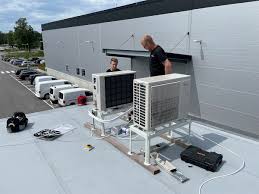
Temporary cooling requirements are increasingly becoming a critical component for businesses across industries. From construction sites and food processing units to events and emergency industrial operations, rent refrigeration plant solutions provide flexible, efficient, and cost-effective cooling options. Here, we explore the key aspects of temporary refrigeration services through a rent refrigeration plant (hyra kylanläggning) , supported by industry insights.
What are temporary cooling installations?
Temporary cooling installations refer to short-term refrigeration systems deployed to meet immediate or seasonal cooling needs. Unlike permanent setups, these systems can be rented and quickly installed, offering flexibility without long-term capital investment. They are commonly used in situations where cooling demands exceed existing capacity or during maintenance shutdowns of permanent plants.
Why do businesses choose rented refrigeration plants?
Statistics show that 65% of industrial facilities experience unexpected cooling requirements at least once a year. Renting a refrigeration plant allows businesses to scale operations efficiently. Benefits include:
Cost efficiency: Eliminates the need for large upfront investments.
Flexibility: Systems can be customized to meet specific temperature and capacity requirements.
Rapid deployment: Units are often ready for installation within days.
Maintenance support: Many rental services include monitoring and technical assistance.
What industries benefit most from temporary refrigeration solutions?
Temporary refrigeration solutions are highly versatile and serve multiple sectors:
Food and beverage: To maintain product quality during seasonal demand spikes.
Construction and pharmaceuticals: For site-specific cooling during production or storage.
Events and hospitality: To manage short-term cooling requirements efficiently.
Industrial operations: For backup during maintenance or emergencies, minimizing downtime.
How are these systems sized for temporary requirements?
Proper sizing is critical to ensure efficiency. Industry data suggests that over 70% of rented refrigeration units are selected based on load calculations, which consider ambient temperature, product sensitivity, and operational duration. Service providers typically offer expert consultations to ensure optimal performance, avoiding over- or under-sizing.
What is the average rental period for temporary cooling plants?
Temporary rentals can range from a few days to several months, depending on the project’s scope. Surveys indicate that most commercial rentals span 2 to 6 weeks, particularly for seasonal industries and event-based operations. Flexible contracts allow businesses to adjust rental periods as operational needs evolve.
Are rented refrigeration plants energy-efficient?
Modern rental refrigeration units are designed with energy efficiency in mind. According to recent industry reports, high-efficiency temporary units can reduce energy consumption by up to 20% compared to older models, lowering operational costs while maintaining consistent temperature control.
How does one select the right rental provider?
Choosing a reputable provider ensures reliable service, maintenance support, and high-quality equipment. Key considerations include the provider’s experience, range of available capacities, rapid deployment capabilities, and adherence to safety and environmental standards.
In conclusion, rent refrigeration plant solutions offer an adaptable, cost-effective, and efficient option for temporary cooling needs. By leveraging expert consultation and high-performance equipment, businesses across industries can maintain operational continuity, product quality, and energy efficiency, even during short-term or unexpected cooling demands.